



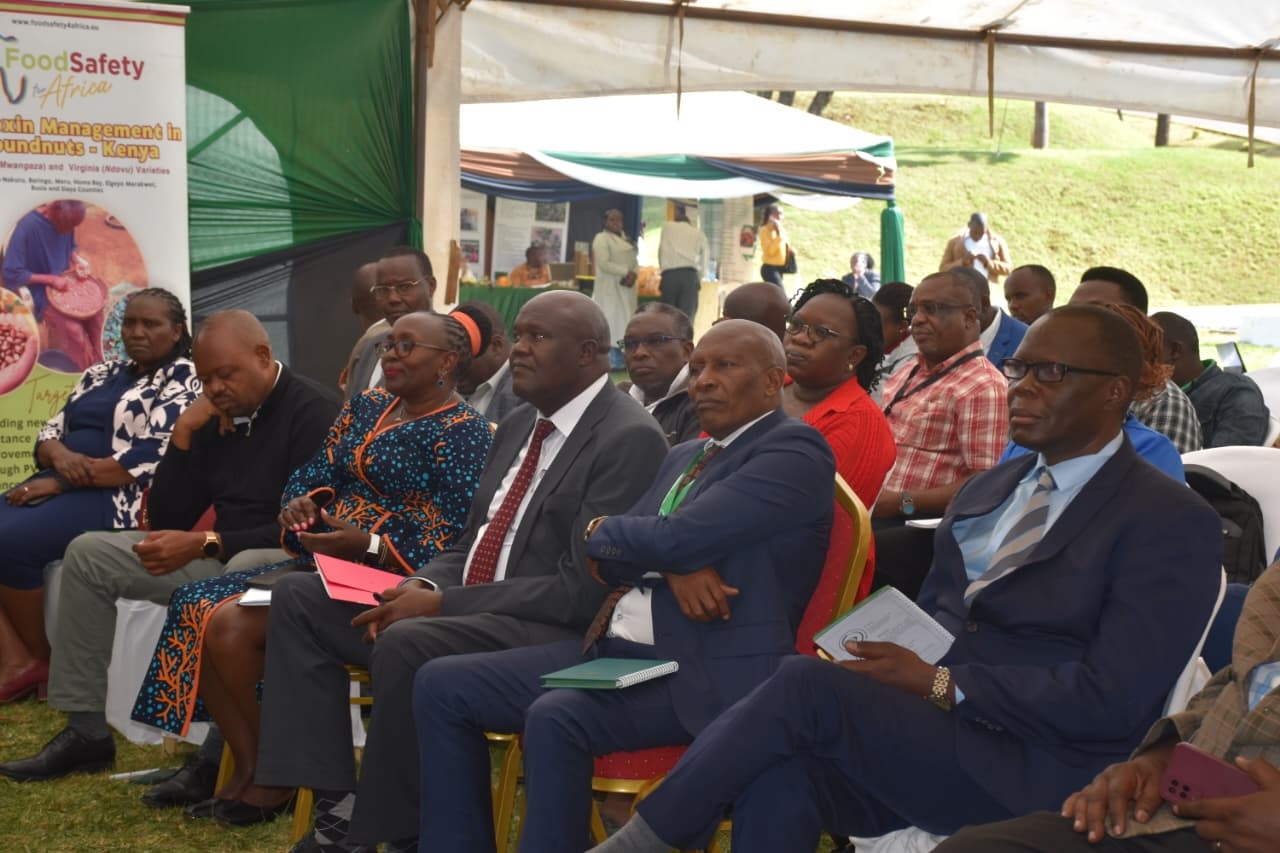
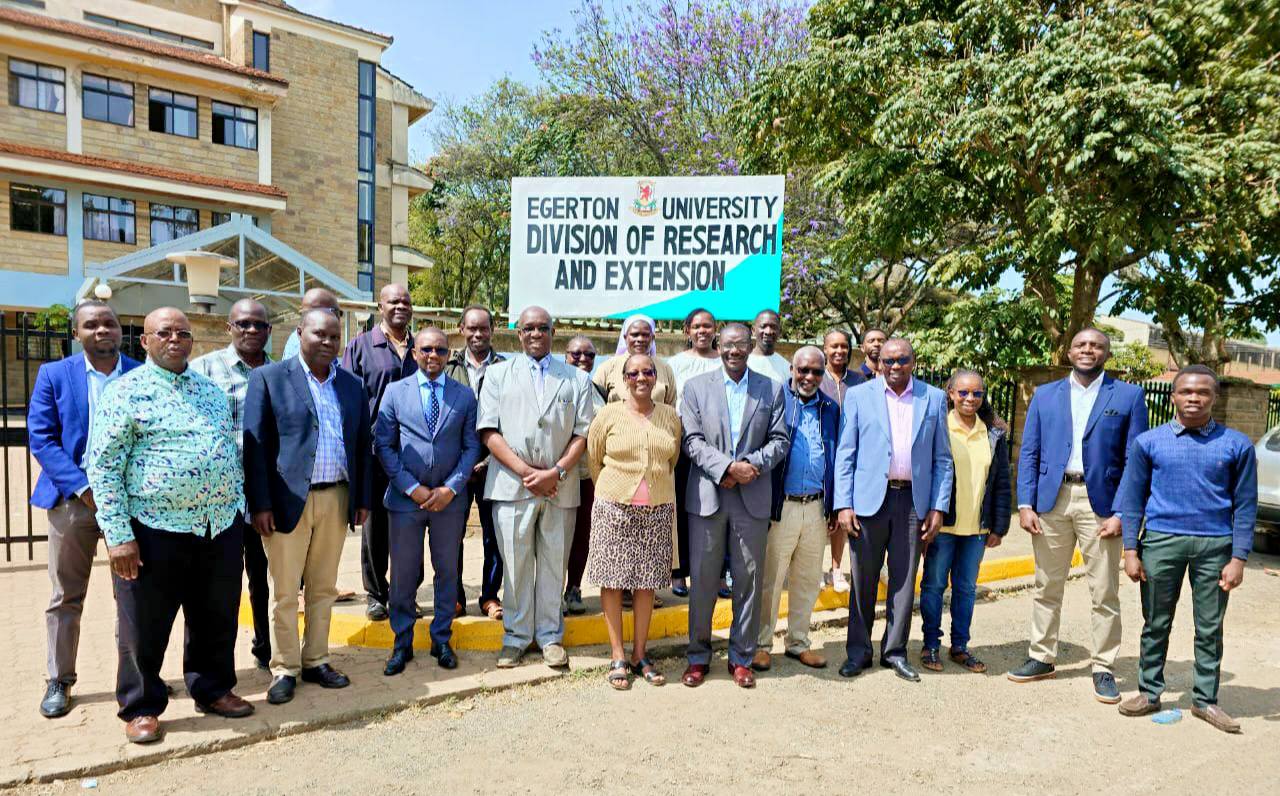
Egerton University today commenced a two-day Research-to-Commercialisation (R2C) capacity-building training aimed at equipping researchers, faculty and student innovators with practical skills to move their innovations from ideation to viable products. The training is supported by the Kenya National Innovation Agency (KeNIA) and Viktoria Ventures, with funding from the UK Government.
Speaking while officially opening the session, the Deputy Vice Chancellor (Academics, Research and Extension), Prof. Bernard Aduda, underscored the importance of building strong internal systems that support innovation. He highlighted that despite the University having many innovators, a large number of ideas do not progress beyond the conceptual stage due to challenges in research-backed validation and understanding the full commercialisation pathway.

Prof. Aduda noted that the University has already established key structures such as the Office of Intellectual Property Management, Technology Transfer Office and a Student Innovation Club and iHUB to nurture upcoming innovators.
“Students play a major role in the innovation ecosystem. They often introduce ideas earlier than they realise. With proper support, these ideas can be scaled,” Prof Aduda explained.
He further emphasised the role of Deans in identifying promising innovations within their faculties and ensuring they receive the necessary attention.The DVC also pointed that the University is continuing to make an updated and enabling policies that are not restrictive.
He acknowledged that Kenya still lacks a fully developed national framework on startups, though a bill is currently before Parliament to guide innovation management in public institutions.

He encouraged innovators to register IP not just for certification but with the intention of commercialisation, warning that unprotected ideas risk being commercialised by others.Director of Research, Prof. George Owuor, echoed these sentiments, adding that the University is actively strengthening its innovation structures guided by its Innovation,Entrepreneurship and Commercialisation Masterplan. “We have continued to identify more innovation champions within the institution. Staff and students need to clearly understand the commercialisation pathway and how the University benefits through royalties,” he stated.

Prof Owuir also emphasised the importance of negotiation strategies when dealing with external partners to ensure innovators receive full value from their work.Lead facilitator Dennis Maloyo of Viktoria Ventures noted that the R2C programme is a timely intervention, especially given the growing innovation activity in universities.
He pointed out that many innovators face challenges in validating their ideas, aligning them with market needs, and navigating commercialisation requirements."We have trained many innovators across Kenya, and one recurring challenge is limited research depth behind innovations. Understanding the commercialisation journey is essential,” he said.
The training continues tomorrow with sessions focusing on IP management, market validation, venture creation, and partnership development.
Written by: By Kurian Musa, Communication Officer