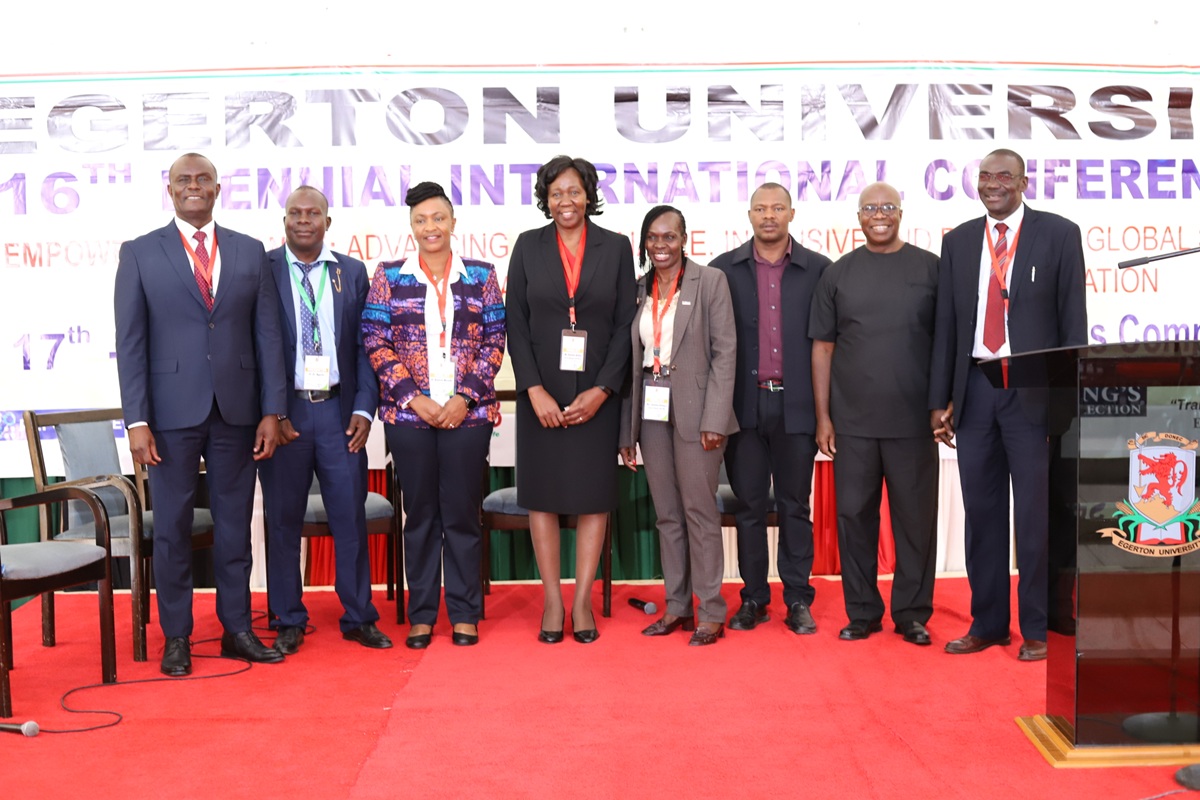




Day two of the 16th Biennial International Conference at Egerton University was marked by high-level reflections on academic strategy, innovation, and knowledge exchange, as experts and stakeholders convened for the opening session. Alexander Kahi, Director of the Centre of Excellence at Egerton University, chaired the session, setting a focused and engaging tone for the day’s deliberations. The session brought together academia, researchers, and practitioners, reinforcing the conference’s role as a hub for intellectual exchange and practical solutions. Opening remarks were delivered by George Owuor, Director of Research and Extension, who underscored the transformative role of research in driving innovation and community impact. He emphasized that universities must not only generate knowledge but also ensure it translates into solutions that address societal challenges. The keynote address by Harish Gandhi from International Maize and Wheat Improvement Center highlighted emerging trends in agricultural research and technology. He pointed to the growing importance of data-driven approaches, climate-smart innovations, and interdisciplinary collaboration in shaping the future of food systems. The session proceedings were meticulously documented by rapporteur Stephen Githengu, ensuring that key insights and recommendations are captured for future reference and policy consideration. The opening prayer was led by Gerishon Kuria, setting a reflective tone for the day. Providing a broader institutional perspective, Gilbert Obwoyere, Director of Examinations and Timetabling at Egerton University, described the conference as both timely and strategic. He noted that the forum offers a critical platform for learners, researchers, and the wider community to engage, exchange knowledge, and explore innovative solutions to contemporary challenges. Prof. Obwoyere further emphasized that scheduling the conference at this point in the academic calendar reflects a deliberate and well-considered policy decision by university management. According to him, the timing enhances academic engagement while maximizing participation from key stakeholders, including students, faculty, and external partners. In addition to the formal discussions, the session featured a light moment that resonated with participants. Prof. Kahi humorously highlighted the dual meaning of the acronym “AI,” drawing from his background in animal science. “You have spoken about AI to mean Artificial Intelligence,” he remarked. “But for those in Animal Science, AI means Artificial Insemination. We often get confused when the terms are used in the same conversation because the insemination came earlier than artificial intelligence.” The remark sparked laughter, offering a brief but memorable pause amid the technical discussions and underscoring the interdisciplinary nature of the conference. Overall, the opening session of day two reinforced the importance of collaboration, strategic planning, and innovation in addressing global and local challenges. Discussions throughout the day continued to build on these themes, with participants exploring actionable pathways to strengthen research impact, enhance resilience, and promote inclusive development. As the conference progresses toward its final day, attention is expected to shift toward consolidating key insights and translating them into practical recommendations that can inform policy, research agendas, and community engagement initiatives both within Kenya and beyond. By Kurian Musa