


Egerton University has established itself as a leader in climate-smart agriculture and sustainable food systems. This recognition comes after Vice Chancellor Prof. Isaac O. Kibwage attended the International Conference on Agricultural Ecology and Green Production at Huanggang Normal University from May 15 to 17, 2026.
Speaking to an audience that included university leaders, researchers, policy makers and industry representatives, Prof. Kibwage emphasized the urgent need for global collaboration to tackle climate change, food insecurity, and environmental damage through sustainable agricultural practices.
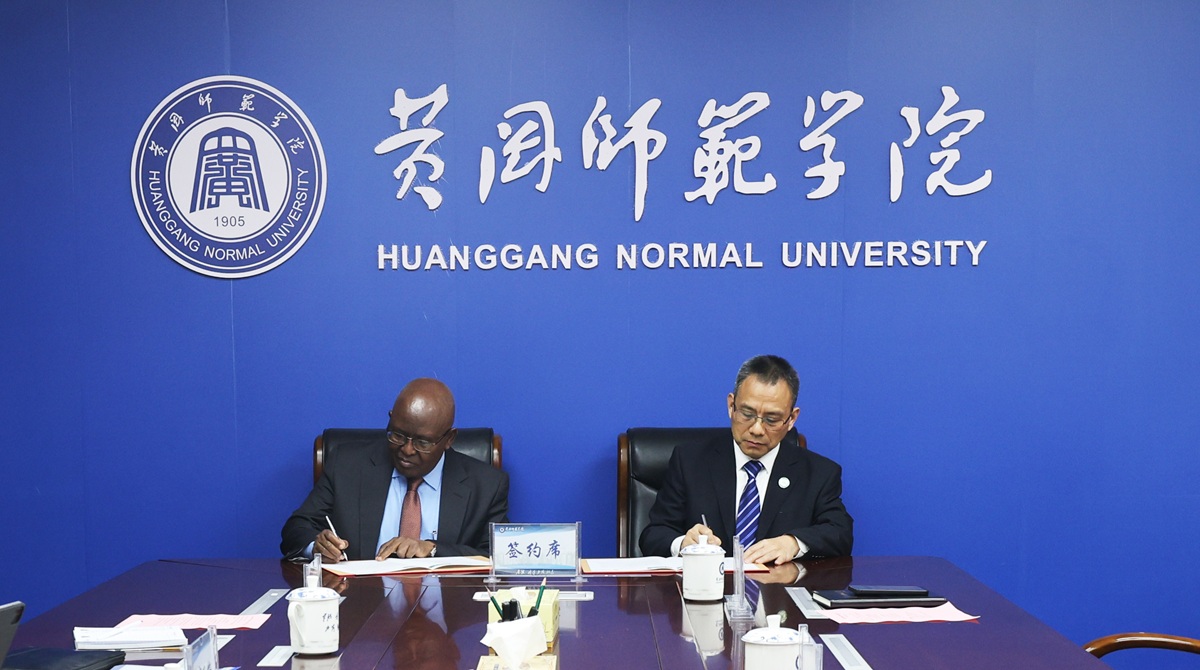 Vice Chancellor Prof. Isaac O. Kibwage signs a Memorandum of Understanding between Egerton University and Huanggang Normal University during the International Conference on Agricultural Ecology and Green Production in China. The partnership is expected to strengthen collaboration in research, innovation, academic exchange and sustainable agricultural development.
In his keynote address, the Vice Chancellor pointed out that agriculture is at a critical juncture as the world confronts biodiversity loss, soil degradation and water scarcity. He stated that agricultural ecology and green production provide practical ways to restore ecological balance and improve food security and livelihoods.
Prof. Kibwage stressed Africa’s significant agricultural potential. He noted that while the continent has nearly 60 percent of the world’s untapped arable land, many countries still struggle with food insecurity due to shortcomings in technology, infrastructure, and investment.
He mentioned Egerton University’s increasing efforts in promoting climate-smart agriculture, sustainable land management, agricultural engineering innovation and digital agriculture systems suited to African needs.
The Vice Chancellor further highlighted the role of universities as drivers of innovation and change in society. He urged for a closer link between agriculture and fields such as climate science, engineering, artificial intelligence, public health and policy to develop sustainable and inclusive food systems.
During the conference, Prof. Kibwage presented several ongoing projects at Egerton University. These included a tomato grafting project through the Confucius Institute, in partnership with the International Fund for Agricultural Development, collaborations with Slow Food Kenya on indigenous foods and biodiversity conservation, and value chain initiatives in potato, cassava and sorghum farming under the TAGDev 2.0 programme supported by the Mastercard Foundation.
He also spoke about the University’s hosting of the World Bank-funded Africa Centre of Excellence in Sustainable Agriculture and Agribusiness Management (CESAAM). This center continues to strengthen postgraduate training, research, and innovation in climate-smart agriculture across Sub-Saharan Africa.
The conference served as an important venue for boosting academic and technological cooperation between Africa and China, especially in areas like precision agriculture, climate-resilient crop development, renewable energy use, and artificial intelligence in agriculture.
Prof. Kibwage reiterated Egerton University’s dedication to enhancing research, innovation, and global partnerships designed to create resilient, productive, and environmentally sustainable agricultural systems for future generations.
The Vice Chancellor was accompanied by Prof. Daniel Auka, Director of Linkages and Collaborations, who participated in the engagements aimed at expanding the University’s global partnerships.
By Agnes Mwangi