



By Kurian Musa
NJORO, Kenya, June 5, 2026
Egerton University hosted a comprehensive monitoring and evaluation exercise for the European Union-funded BREEDTECH Project on Friday, bringing together university management, project partners, researchers, and representatives of the European Education and Culture Executive Agency (EACEA) to assess progress, impact, and long-term sustainability.
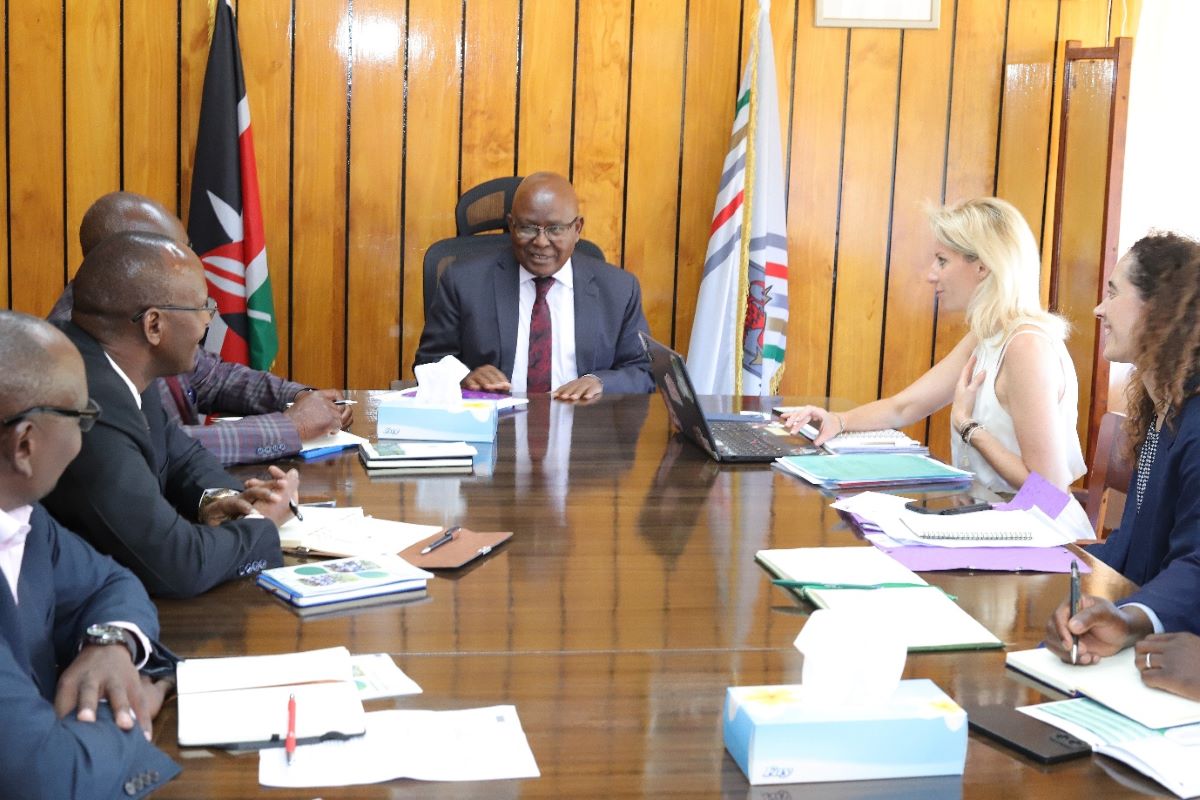
The evaluation, held at the university’s Main Campus in Njoro, was led by Ms. Lauriane Bertrand, Deputy Head of Unit at EACEA. The exercise focused on reviewing the achievements of the BREEDTECH Project—formally known as Building Capacity in Plant Breeding and Biotechnology Education and Research through Partnerships in Africa, the Middle East and Europe—and examining its contribution to research, training, innovation, and institutional capacity development.
The day's activities began with a focus group discussion involving administrative staff drawn from the Research and Extension Directorate, Finance Department, Procurement Unit, Legal Office, and Marketing and Communication Department. Participants shared experiences gained during project implementation and discussed strategies for strengthening collaboration among the consortium's international partners.
In her invitation to staff participating in the exercise, BREEDTECH Principal Investigator at Egerton University, Dr. Miriam K. Charimbu, underscored the importance of the evaluation in assessing the project's achievements and institutional impact.
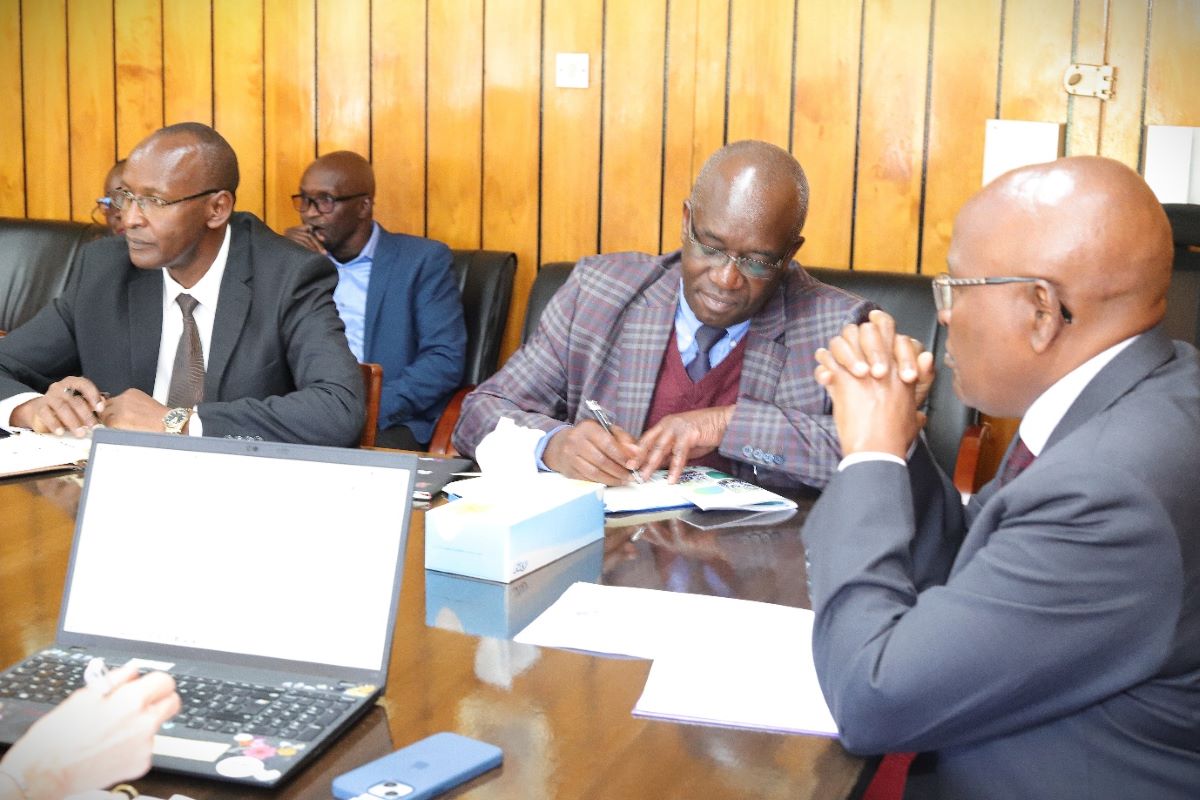
The EACEA delegation later paid a courtesy call on Egerton University Vice-Chancellor Prof. Isaac Kibwage and members of the university management team before proceeding to project review sessions and site visits.
Speaking during the engagement, Prof. Kibwage commended the project's achievements and its contribution to strengthening research and innovation in plant breeding and biotechnology. He noted that BREEDTECH has provided valuable opportunities for staff, students, and farming communities while positioning the university to develop sustainable interventions beyond the lifespan of donor funding.
"The project has significantly enhanced our capacity in plant breeding and biotechnology while creating meaningful linkages between academia, research, and the farming community," said Prof. Kibwage. "Our focus now is to ensure that the gains made are sustained and integrated into the university's long-term strategic priorities."
The monitoring exercise also included presentations by project coordinators and consortium members on the implementation status of various work packages, project deliverables, achievements, challenges, and sustainability plans. The hybrid session enabled participation from partner institutions across Africa, the Middle East, and Europe.
Project Coordinator Prof. Miriam Charimbu highlighted key milestones achieved since the project's inception, noting that BREEDTECH has enhanced academic training, strengthened research capacity, improved laboratory infrastructure, and expanded collaboration among participating institutions.
He expressed appreciation to the university management for its continued support and acknowledged the role played by project teams and partners in achieving the project's objectives.
"Our collective efforts have transformed learning, research, and practical training experiences for students, staff, and surrounding communities,"said the Deputy Vice-Chancellor (Academic, Research and Extension) Prof. Bernard Aduda, who went ahead to laud the project's achievements and reaffirmed the university's commitment to sustaining its outcomes.
As part of the evaluation, the EACEA team conducted site visits to various project-supported facilities across the university. The visits provided an opportunity to assess infrastructure, research equipment, laboratories, demonstration plots, and other investments established through the European Union grant.
Prof. Kimurto and Eng. Kobia Mucheke guided the delegation through the facilities, highlighting how project-supported resources have strengthened teaching, research, and community outreach activities.
The evaluation concluded with a close-out session at Field 3 attended by university management, project staff, and consortium representatives. Deputy Vice-Chancellor (Administration, Finance and Planning) Prof. George Muthaa.
The university leadership thanked the European Union and EACEA for their support, noting that the project's objectives align closely with Egerton University's strategic plan, research agenda, and mandate of advancing agricultural innovation.
Prof. Muthaa particularly praised the project's contribution to research output, capacity building, and innovation, noting that several peer-reviewed publications and collaborative initiatives had already emerged from the programme.
"We are indeed grateful for the outputs and outcomes achieved," said Prof. Muthaa. "We look forward to continuing this partnership and engagement and scaling up the innovations into products that can be commercialised to create jobs and contribute to economic development."
Project Team of Egerton University include Prof. Paul Kimurto, Dr Miriam Charimbu, Dr. Maurice Oyoo, Dr. Mercy Wamalwa, and from Laikipia University: Mr. Benson Obwanga (CoPI), Dr. Daniel Pande and Dr. Barnabas Kurgat.
In a separate meeting held at the CMRT Seminar Room was held with end-beneficiaries from BREEDTECH; Faculty members & program leaders; beneficiary, Students, Deans, Chair of departments, Directors Board of Post graduate studies (BPGS), the Director Board of Undergraduate studies (BUGS); Deputy Vice Chancellor ARSA LU, technical staff; Farmers; extension workers; seed company representatives; agro processors representatives. The session was Chaired by Prof. Joyce Ndemo and facilitated by Dr. Stephen Githengu (EGU) Dr. Janet Nyukuri (LU).
The monitoring and evaluation exercise reaffirmed the consortium's commitment to ensuring that BREEDTECH's achievements continue to benefit higher education institutions, researchers, students, farmers, and communities long after the project period comes to an end.