


By Kurian Musa
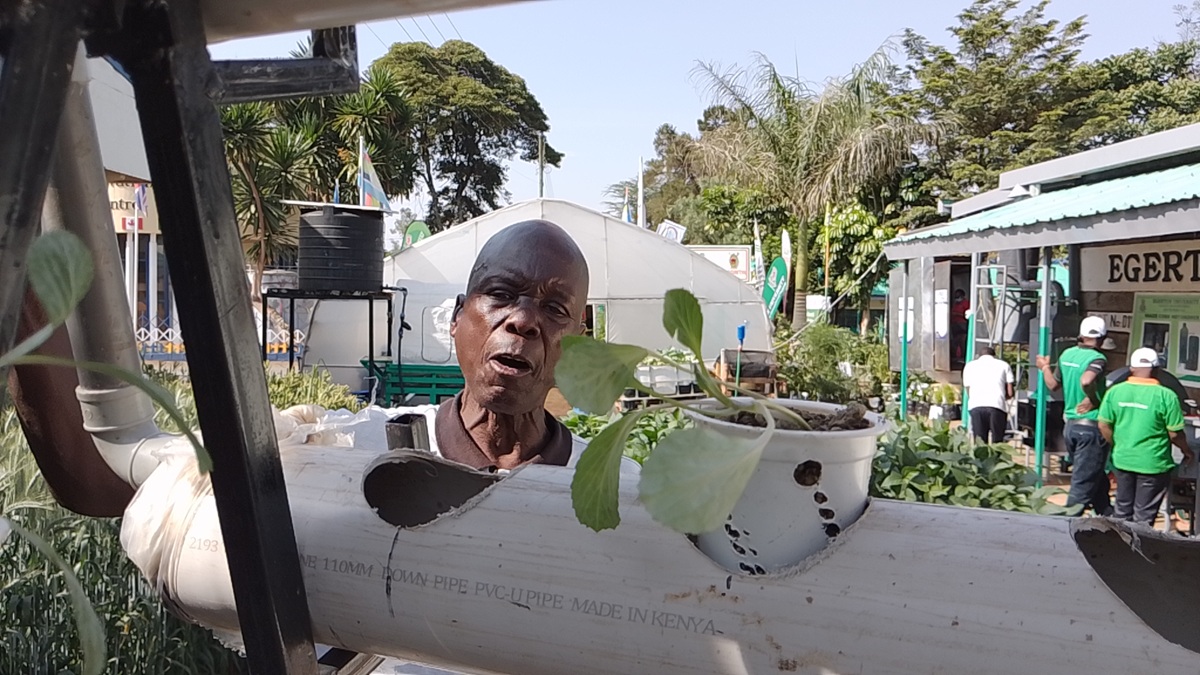
Samuel Onani Ooko, Patron of Jua Farm Youth, explains how a hydroponic farming system works during the Nakuru National Agricultural Society of Kenya (ASK) Show. Ooko says hydroponics enables farmers to achieve high yields using less land and water while promoting climate-smart agriculture.
Photo: Kurian Musa
Q: Please introduce yourself and tell us about your organisation and the hydroponics project.
Samuel Onani Ooko: My name is Samuel Onani Ooko, and I am the Patron of Jua Farm Youth. Our group is promoting hydroponics, a soilless farming technology that enables farmers to produce more food using less land and water.
I am passionate about mentoring young people because I want to leave a legacy. Leadership is not about being present forever; it is about preparing others to continue the work long after you are gone. That is what motivates me.
Q: Did your farming journey begin in your youth, or did you embrace agriculture after retirement?
Ooko: I ventured into intensive farming after retirement, but agriculture has always been part of my life. I grew up in Salgaa, where farming was our way of life. Before going to school every morning, we first worked on the family farm.
Unfortunately, many young people have grown up believing farming is not a career. That perception must change. Agriculture is one of Kenya's greatest assets. A farmer feeds his family first before feeding the nation. There is dignity and fulfilment in farming.
Q: How can we encourage more young people to take up agriculture?
Ooko: We must begin with mindset change. Too many young people are waiting for white-collar jobs that are becoming increasingly scarce.
That is why I brought together the youth in our group and encouraged them to view agriculture differently—not as a last resort, but as a business and a profession. Smart agriculture is profitable, innovative and sustainable. My role today is simply to guide them as they take the lead.
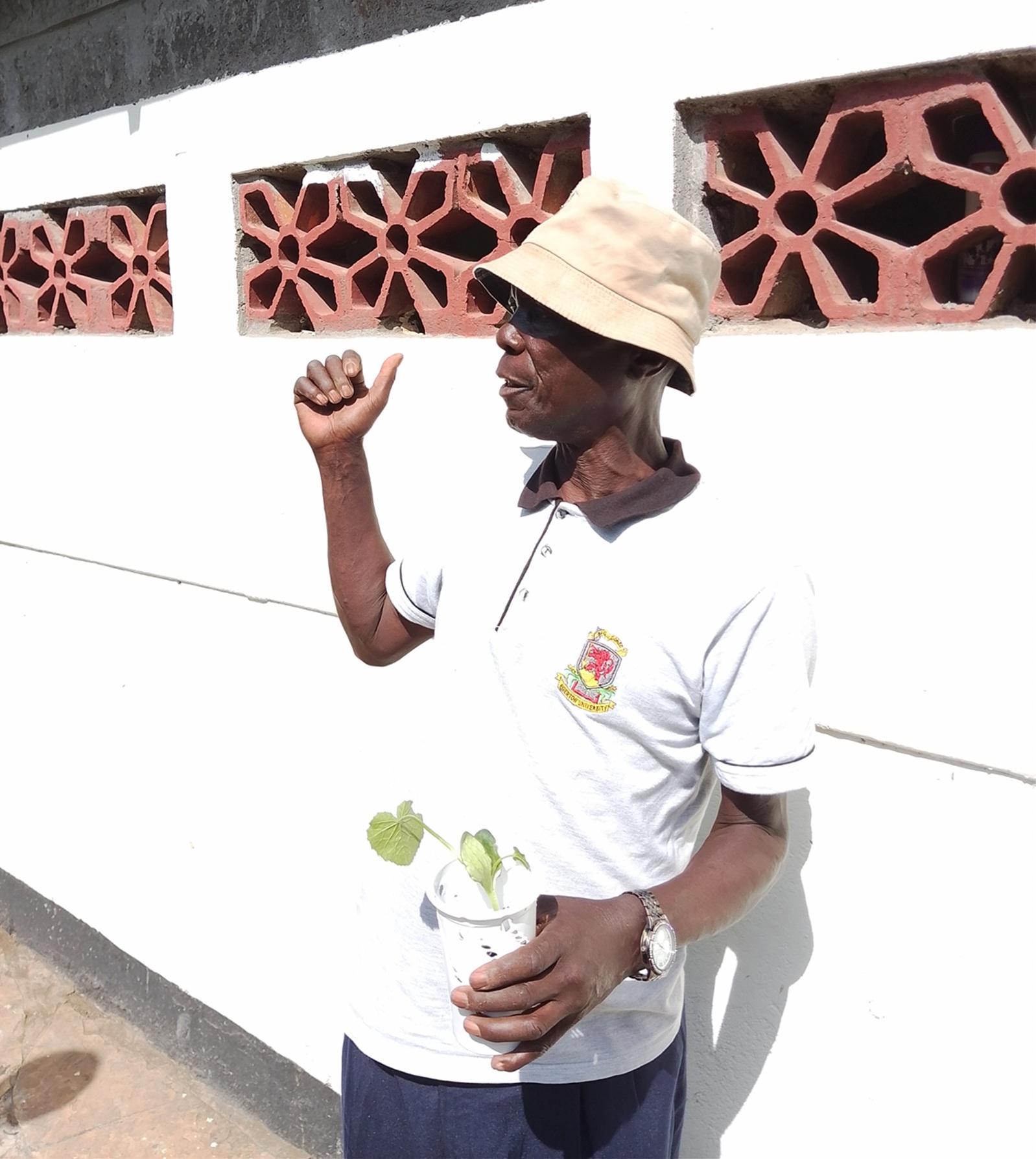
Samuel Onani Ooko displays a hydroponically grown seedling, demonstrating the soilless farming technology that is empowering young people with sustainable and profitable agricultural skills during the Nakuru National ASK Show.
Photo: Kurian Musa
Q: What makes agriculture "smart"?
Ooko: Smart agriculture is farming that works with nature rather than against it.
It means protecting the environment by minimising soil disturbance, conserving forests, using water efficiently and preventing soil erosion. Hydroponics embodies these principles. It enables farmers to produce high yields within a small space while conserving natural resources. It is environmentally responsible and economically viable.
Q: Can hydroponics help tackle youth unemployment, especially among young people living in urban areas?
Ooko: It may not solve every challenge, but it is certainly part of the solution. If more young people adopt hydroponics and other modern farming technologies, we can create employment, improve food security and generate sustainable incomes. I believe it can address a significant proportion of the unemployment challenge.
Q: Do you see growing interest among young people?
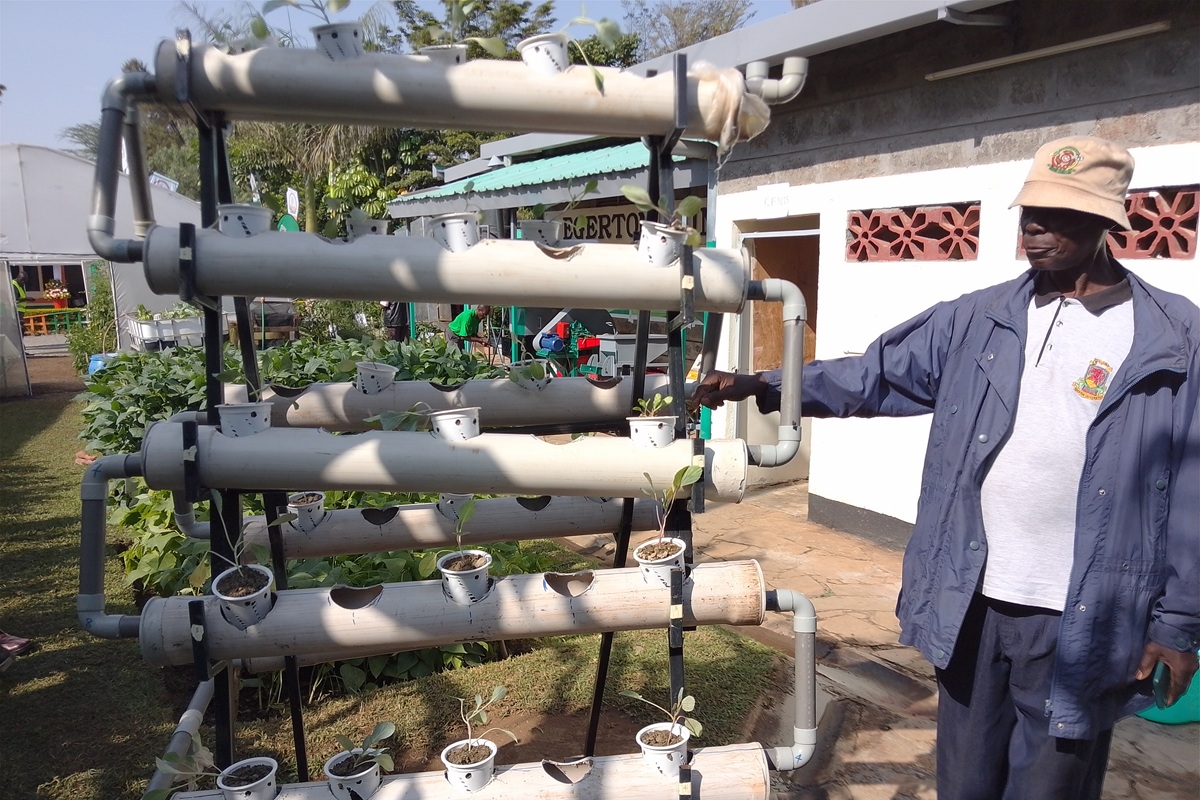
Samuel Onani Ooko speaks beside a hydroponic vegetable production unit at the Egerton University exhibition stand during the Nakuru National ASK Show. He says hydroponics offers young people an opportunity to embrace smart agriculture, improve food security and create sustainable livelihoods.
Photo: Kurian Musa
Ooko: Absolutely. The interest is already there. Our responsibility is to nurture it by continuing to mentor young people and encouraging those already involved to inspire others to join.
Q: What challenges do you encounter while working with the youth?
Ooko: Technology presents both opportunities and challenges. Smartphones can be a distraction, but when used responsibly they become powerful learning tools.
Our young people researched hydroponics online, connected with experts and established partnerships beyond Kenya. Today, we receive technical guidance from international partners because the youth took the initiative to seek knowledge. Their willingness to learn has accelerated our progress.
Q: How far has the project progressed?
Ooko: We currently operate two hydroponic greenhouses. Before our European Union-supported project concludes, we expect to establish two additional greenhouses.
That will strengthen the project and enable the youth to expand it independently in the years ahead.
Q: Is hydroponics economically viable?
Ooko: Very much so.
One hydroponic greenhouse can generate approximately KSh1 million annually under good management. Even at 80 per cent of the target, a farmer can earn about KSh800,000 per year.
Considering that the greenhouse occupies only 8 metres by 20 metres, the returns demonstrate the enormous potential of hydroponic farming compared to conventional production systems.
Q: How has retirement been for you?
Ooko: Retirement has been fulfilling because I am doing what I love. Farming is not simply a source of income; it is my passion.
I often joke that if you cut my blood, you will find farming in it. Agriculture is part of my identity.
Q: What advice would you give people approaching retirement?
Ooko: Plan before retirement, not after.
While you are still employed, invest in your home and prepare where you will eventually settle. Many people become comfortable in the city, but retirement eventually takes them back home.
Build your landing place while you still have the resources and energy. Do not wait until retirement arrives.
Q: Finally, what role has Egerton University played in this initiative?
Ooko: Egerton University has been an invaluable partner. The University's researchers and technical experts have supported us with knowledge, training and innovation, helping young farmers adopt hydroponic technology successfully.
This collaboration demonstrates the importance of partnerships between universities and communities. Research should not remain in laboratories.
It should reach farmers, empower young people and create practical solutions that improve livelihoods. That is exactly what we are witnessing through this partnership.