



By Musa Kurian
NJORO, Kenya – A simple practice used by a grandmother in rural Kenya could hold valuable lessons for modern agricultural science.
For years, she used ash to protect harvested grain from weevils. The traditional method helped safeguard household food. Today, researchers at Egerton University believe such indigenous knowledge deserves renewed scientific attention.
The university is strengthening research ties with French scientists to develop environmentally friendly ways of controlling agricultural pests. The partnership also seeks to document traditional farming practices that risk disappearing.

The visiting French researchers met Acting Vice-Chancellor Prof. George Muthaa and his deputies, Prof. Julius Kipkemboi and Prof. Bernard Aduda. The discussions took place at the university, with the Agro-Science Park providing a platform for potential research collaboration.
The scientists are interested in biological control methods targeting pests that attack peas, beans, cotton and other crops. Their research will explore beneficial insects, fungi, bacteria and other natural organisms that can help reduce dependence on synthetic pesticides.

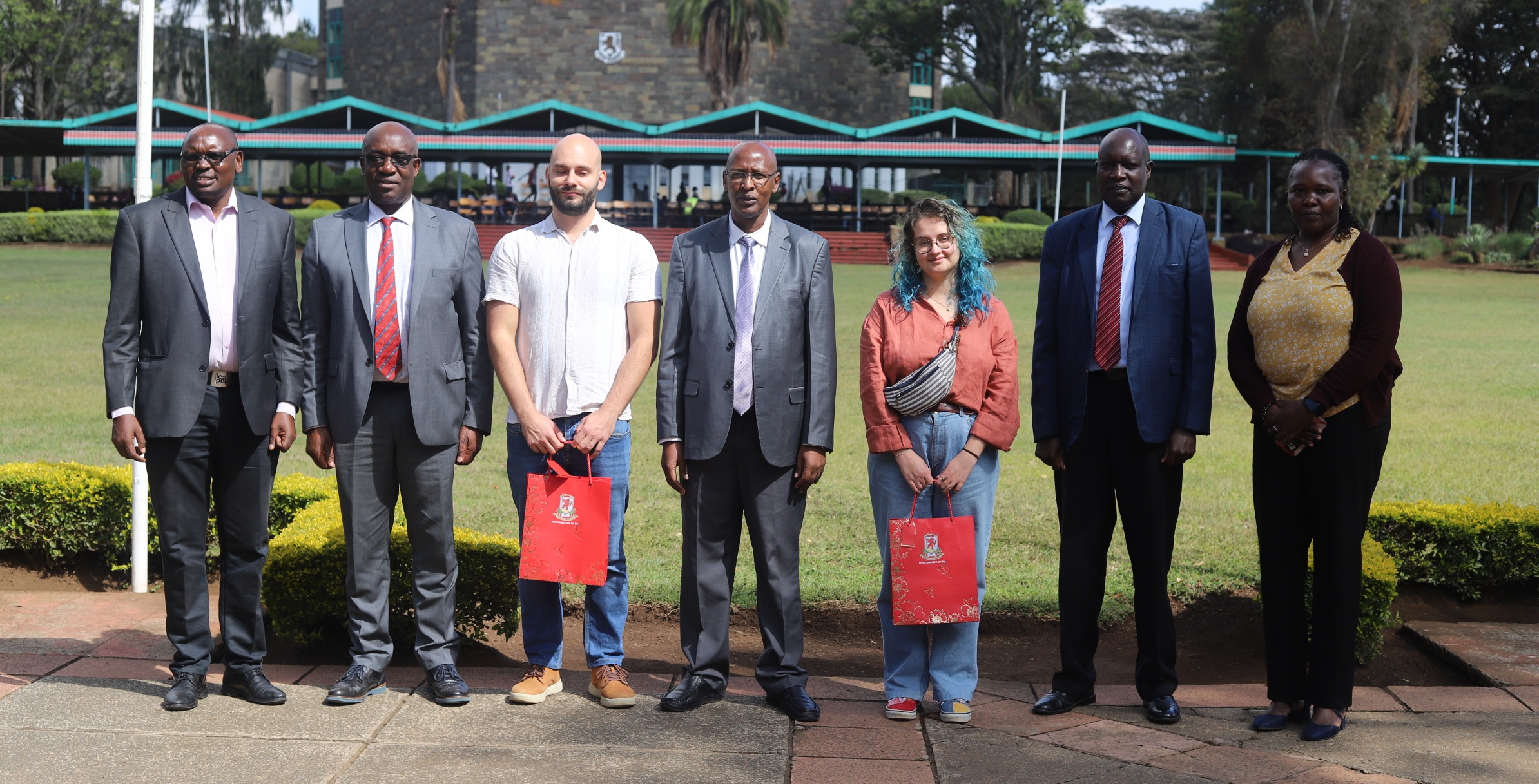
Egerton University Deputy Vice-Chancellor (Administration, Finance and Planning) Prof. Julius Kipkemboi engages visiting French researchers on opportunities for collaborative research to develop environmentally friendly solutions to agricultural pest challenges
For farmers, the stakes are high. Insect pests can destroy crops after months of hard work and investment. Such losses threaten household incomes and food security.
Prof. Muthaa welcomed the partnership and pledged the university's support. He emphasised the importance of finding practical solutions while preserving indigenous knowledge.
He noted that excessive reliance on harmful chemicals makes the search for safer pest-control alternatives increasingly important.
Prof. Kipkemboi challenged researchers to develop technologies that respond to farmers' everyday challenges. He observed that pest attacks can wipe out investments made throughout the farming season.
Prof. Aduda brought a human dimension to the discussions. He recalled his grandmother's traditional use of ash to protect stored grain from weevils.
He warned that such knowledge is gradually disappearing as farmers embrace commercially marketed agricultural inputs.
He called for social science research to document traditional practices and investigate their scientific value. He also stressed that communities must receive recognition and protection when their knowledge informs new technologies.
The partnership will therefore go beyond laboratory experiments. It will explore opportunities for researchers to study neighbouring farming communities and learn directly from farmers.

Egerton University also hopes to involve postgraduate students and academic staff through joint experiments, publications and exchange programmes.
Demonstration farms will be important in translating research into practice. They can allow farmers and students to observe new technologies and assess their potential benefits.
The proposed collaboration will focus on biological pest control, indigenous knowledge documentation, environmentally friendly biopesticides and knowledge exchange between Kenya and France.
Ultimately, the initiative carries a message that extends beyond scientific discovery.

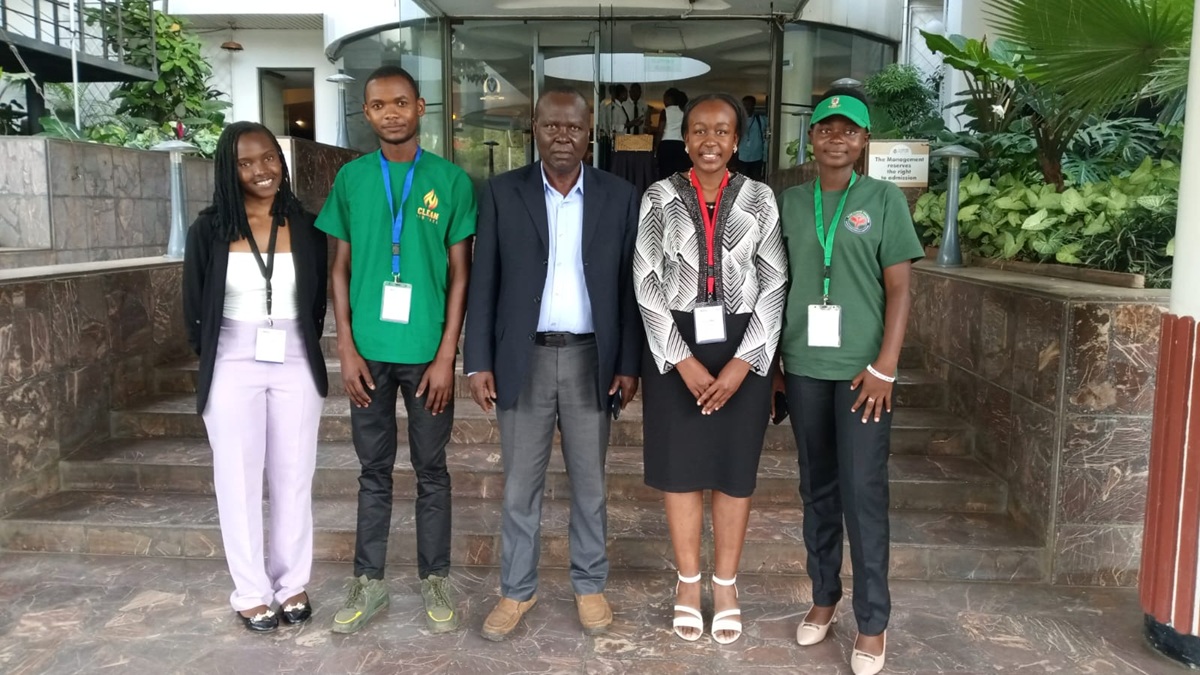
Egerton University researchers Prof. Paul Kimurto and Dr Miriam Charimbu host the visiting French delegation as the institutions explore opportunities for joint experiments, researcher exchanges and practical agricultural innovations.
Agricultural innovation must recognise the people who have cultivated the land and preserved practical knowledge for generations.
By bringing together indigenous wisdom and modern research, Egerton University and its French partners hope to develop sustainable solutions that protect crops, reduce losses and strengthen food security.
For farmers, the most meaningful measure of success will be simple: healthier crops, fewer losses and safer food for their families.