


By Kurian Musa
Egerton University has officially confirmed willingness and is excited to host the 12th World Ploughing Championship for the third time in its storied history, following a high-profile delegation visit to the institution's Main Campus in Njoro today. This is the third time Kenya is set to host the contest; in 1995, 2017 and looking forward to 2027.
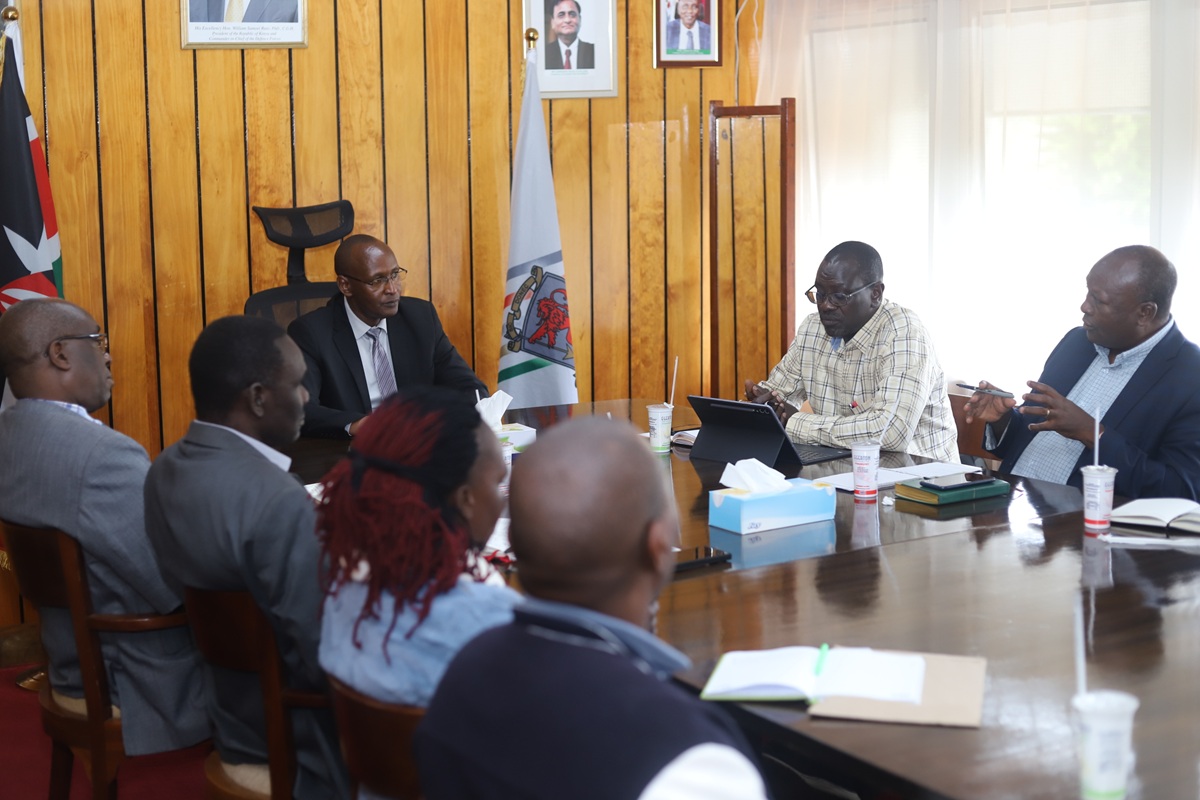
"We are partners in this event and we shall support you," said Acting Vice-Chancellor Prof. George Muthaa in his Boardroom, reassuring the visiting delegates of the university's complete commitment to ensuring the international contest achieves resounding success.
The major announcement follows strategic deliberations between the university management and a technical delegation from the Kenya Ploughing Organisation (KPO), operating under the auspices of the Agricultural Society of Kenya (ASK).
The consultative engagement served as a crucial preliminary milestone ahead of the proposed 12th World Ploughing Championship, which is officially scheduled to take place in December 2027.
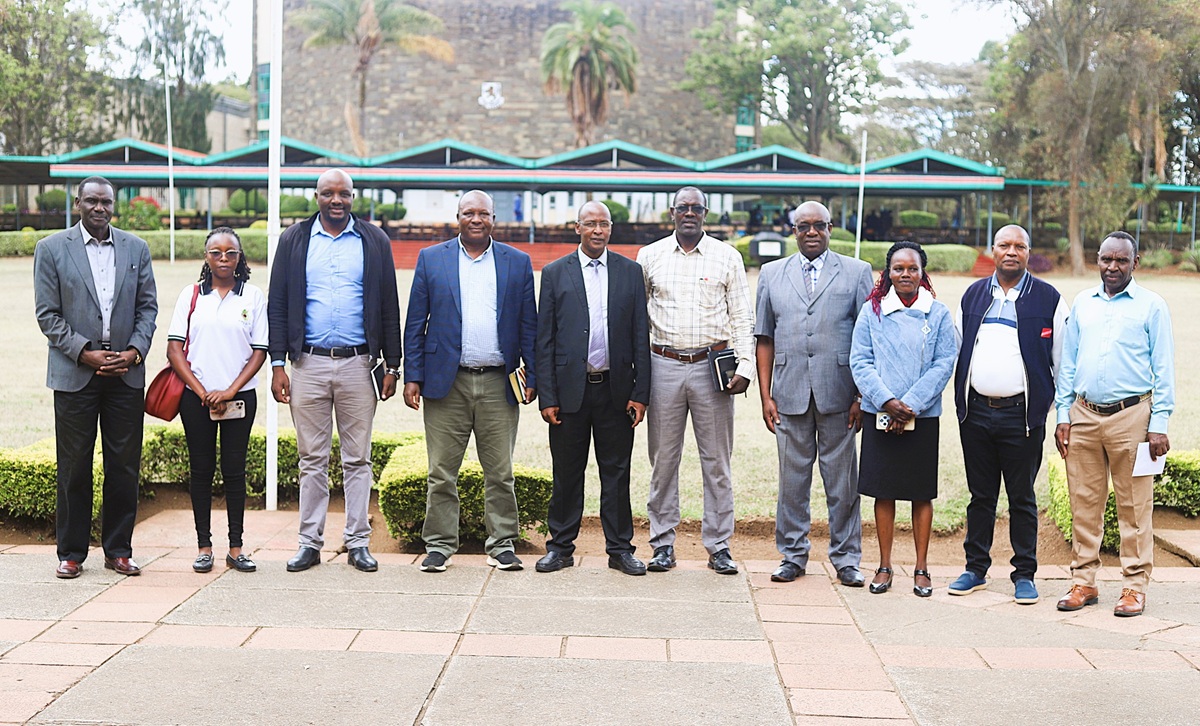
The visiting delegation was led by Dr. Perminus K. Migwi representing the ASK Nakuru Show branch. Key delegation members accompanying him included Mr. Richard Aiyabei (KPO member), Dr. Amos Kirui (Branch Manager, ASK Central Region), J.J. Gitonga (National KPO Coach), Ms. Rebecca Naabu (KPO member, Central Rift Branch), and
Receiving the delegation alongside Acting Vice-Chancellor Prof. Muthaa were senior university administrators, including the Deputy Vice-Chancellor in charge of Academic Affairs, Prof. Bernard Aduda, and the Director of Research and Extension, Prof. George Owuor, Dr. Maina Kariuki from Egerton University's Tegemeo Institute of Agricultural Policy and the University's Ngongongeri Farm Manager.
During the session, the visiting delegation outlined the comprehensive technical, structural, and logistical requirements necessary to successfully stage a global event of this magnitude.
The detailed discussions focused heavily on essential operational elements, including competition fields, tractor specifications, workshop infrastructure, heavy equipment storage, and delegate accommodation arrangements.
The high-profile tournament is anticipated to attract elite agricultural competitors from approximately 30 participating countries across the globe, with each nation fielding two top-tier ploughmen.
The global contest will feature both reversible and conventional ploughing disciplines, requiring specialized agricultural machinery and carefully prepared soil conditions.
To maintain strict operational standardization, the technical delegation identified New Holland tractors, generally ranging between 60 and 80 horsepower, as the proposed standard equipment for the competition.
Furthermore, the contest will mandate two distinct field environments: competition plots featuring crop residues, such as wheat or oat stubble, alongside dedicated grassland that has remained unploughed for several consecutive years.
Establishing uniform soil and surface conditions across all designated plots will be vital to ensure total fairness among all competing nations.
Logistical planning also highlighted the critical need for modern workshop facilities fully equipped for complex mechanical repairs, tire puncture handling, and heavy structural welding.
Sufficient and secure storage space will likewise be required on campus to receive, store, and protect specialized agricultural machinery transported by international teams. Because several foreign competitors and technical officials plan to arrive weeks prior to the championship to acclimate to local soil conditions and conduct intensive practice runs, seamless early planning and preparation remain imperative.
Prof. Muthaa welcomed the dialogue, underscoring the necessity of building sustainable partnerships that generate lasting institutional benefits long after the global event concludes.
"This collaboration is significant to strengthen the university's technical training infrastructure, particularly through upgraded access to advanced agricultural machinery and specialized workshop equipment," explained Prof. Muthaa.
The Acting Vice-Chancellor noted that strategic industry partnerships help bridge operational equipment gaps while enhancing hands-on technical learning for students. He reaffirmed Egerton's dedication to blending academic instruction with practical field experience to equip graduates for modern agricultural industry demands.
Furthermore, the university's residential facilities were identified as a key accommodation resource for international visitors, while emphasizing ongoing logistics assessments regarding transport, local road networks, and campus access.
For Egerton University, hosting the landmark 2027 championship offers a premier opportunity to showcase its agricultural heritage while strengthening links between academic training, research, and industry.
For KPO, the engagement provides a vital opportunity to assess and utilize the institution's extensive capabilities, practical training facilities, and established rural infrastructure.