



• Students
  • AI
  • Policies
  • Programmes
  • Education Financing Portal
  • Library
  • Downloads
  • Gallery
  • Lord Egerton Castle
  • Staff profiles
Egerton UniversityEgerton UniversityEgerton University
  • Home
  • Admission
    • Admissions
      • Undergraduate Admission
      • Post Graduate Admission
      • Available Intakes
      • Online Applications
      • E-Campus
      • KUCCPS Admission Portal
      • Higher Education Financing Portal
      • Joining Self-service Portal
    • Downloads
      • Fees Structures
      • Application Forms
      • Bursary / Work Study Form
      • Acceptance or Deferment
      • Student Registration Form
      • Student Medical Form
      • Rules and Regulations
      • Student's Hand Book

    apply 2 1

  • Academics
    • Academics
      • Division of Academics,Research and Extension
      • Academic Programmes
      • University Library
      • Scholarships & Grants
      • Faculties & Departments
      • School of Distance Learning (SoDL)
      • Institute of Women, Gender & Development Studies
      • Academic Directorates & Boards

    apply 2 1

  • Explore
    • Governance
      • Organisational Structure
      • Office of the Chancellor
      • The University Council
      • The Management Board (UMB)
      • The University Senate
    • Management
      • Office of the Vice-Chancellor
      • Division of Academics, Research & Extension
      • Division of Administration, Finance & Planning
      • Directorate of Research & Extension
      • Office of the Principal, NCCC
      • Deans of Faculties
      • Office of the Dean of Students
    • About the University
      • University History
      • Fact Sheet
      • University Profile
      • Vision and Mission
      • Our Mandate & Philosophy
      • University Anthem
      • Awards & Achievements
      • Partners & Collaborations
    • More About us
      • Campuses & College
      • Institutes & Schools
      • Directorates & Boards
      • Faculties
      • Departments
      • Teaching and Learning
      • Contacts, Location & Addresses
  • Research
    • Sections
      • Directorate of Research
      • Tegemeo Institute
      • Institute of CMRT
      • Directorate of DRTEC
      • Directorate of AgroPark
      • Njoro River Rehabilitation
      • University Liaison Office
    • More About the Division
      • UNESCO Chair in Bioethics
      • Finance & Accounts (R&E)
      • Projects & Publications
      • Collaborators & Partners
      • University Conferences
      • University Journals
      • Institutional Repository
      • Research News & Updates
  • Info
    • University News & Updates
      • Egerton Radio 101.7 FM
      • Latest News & Updates
      • Library Latest News & Updates
    • Public Information
      • Parents Portal
      • Service Delivery Charter
      • Egerton University Policies
      • Financial Statements
      • Calendar of Events
      • Exhibitions & Trade Fairs
      • Customer Feedback
      • Speeches
      • Quality Policy Statement
    • Students
      • Notice Board
      • Campus Life
      • Campus Tour
      • Photo Gallery
      • Downloads Center
      • Academic Timetables
      • E-Learning
      • Students Portal
    • Staff
      • Staff Notice Board
      • Update My Staff Profile
      • Performance Appraisal
      • Promotion Guidelines
      • Corporate Staff Email
      • Login to Staff Portal
      • Members of Staff

Advanced Search
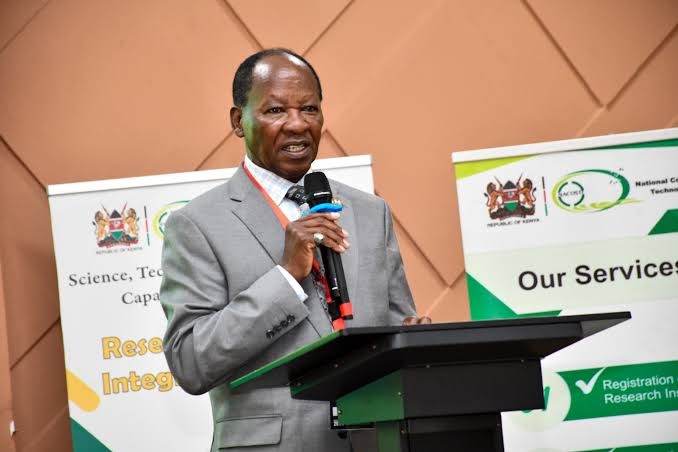
A Sneak Preview On Prof. Vassey Mwaja’s Public Lecture at Egerton University

A Sneak Preview On Prof. Vassey Mwaja’s Public Lecture at Egerton University

05 November 2026

By Kurian Musa     

Prof. Vassey Mwaja’s Public Lecture at Egerton University raises a fundamental question about the future of higher education, scientific research and innovation in Africa: How do we harness science, technology and innovation to improve the quality of life of our people while positioning African universities as globally respected centres of knowledge and discovery?

One of the most compelling messages emerging from the lecture is that Africa must move beyond the ambition of imitating established global universities and begin building institutions that reflect its own aspirations, priorities and development challenges.

The reference to Oxford is particularly instructive. African universities should certainly benchmark themselves against institutions such as Oxford, Cambridge and Harvard, but benchmarking should not become an exercise in imitation. 

We should study what these institutions do well, understand the systems that sustain their excellence, and identify practices that can be adapted to our institutional and socioeconomic contexts.

The ambition should be to make our own Oxford: institutions that are internationally respected, locally relevant, intellectually independent and capable of attracting researchers, investors and collaborators from across the world.

The inequality of knowledge production

A particularly important dimension of the lecture concerns the structural inequalities confronting African researchers in global knowledge production.

Research excellence is frequently measured through publications, citations, patents, technology transfer and commercialisation of discoveries. These are legitimate indicators of research performance and institutional competitiveness. However, the question is whether African researchers have equitable opportunities to participate in the systems through which these indicators are generated and recognised.

Consider the cost of publishing in internationally recognised journals. Article processing charges can reach thousands of US dollars. For a researcher working in an African public university, US$3,000 could represent resources that would otherwise support laboratory operations, field research, postgraduate students or another research experiment.

This creates a troubling paradox: researchers are encouraged to publish internationally, but the financial architecture of international publishing can exclude precisely those researchers whose work needs greater global visibility.

Similarly, access to subscription-based scientific journals remains a challenge for institutions with limited library budgets. The result is an uneven research ecosystem in which the capacity to produce knowledge does not always translate into the capacity to disseminate, access or benefit from it.

We must therefore rethink the research publishing ecosystem and explore stronger institutional repositories, open-access platforms, regional journals, publishing consortia and more equitable funding arrangements.

African research must be visible, accessible and influential.

The North–South partnership question: Who owns the research?

Perhaps the most thought-provoking issue raised in the lecture is the imbalance in North–South research collaborations.

International research partnerships are essential. They provide opportunities for access to advanced technologies, specialised expertise, research infrastructure and funding. However, collaboration must not become a mechanism through which African researchers supply data, facilitate fieldwork and provide contextual knowledge while strategic decisions, intellectual ownership and international recognition remain concentrated elsewhere.

There is a fundamental difference between being invited to participate in research and being empowered to lead it.

Who determines the research questions? Who controls the budget? Who owns the data? Who leads the publication? Who holds the intellectual property? Who benefits when a discovery is commercialised?

These are not peripheral administrative questions. They go to the heart of research sovereignty and equity.

African researchers must be involved from the conception of research ideas through proposal development, implementation, analysis, publication, intellectual property management and commercialisation.

Equitable partnerships should guarantee meaningful African leadership, fair authorship arrangements, shared governance, transparent resource allocation and mutually agreed benefit-sharing mechanisms.

We should not simply be research sites for the rest of the world. We must be intellectual partners, research leaders and co-owners of scientific discoveries.

The case for South–South collaboration

The lecture also invites us to reflect on the potential of South–South research collaboration.

African universities cannot depend exclusively on partnerships with institutions in Europe and North America to build their research capabilities. There is considerable value in strengthening collaboration among African universities and expanding partnerships with institutions in Asia, Latin America and other parts of the Global South.

These partnerships can help institutions pool research infrastructure, share expertise, mobilise resources and address common development challenges.

Imagine African universities establishing joint research laboratories, shared doctoral programmes, regional innovation hubs, collaborative grant schemes and interconnected scientific publishing platforms.

Such arrangements would strengthen research capacity while creating opportunities for African researchers to determine their own research priorities.

South–South collaboration should, however, be judged by its outcomes rather than the number of memoranda of understanding signed. The real test is whether it produces joint discoveries, stronger institutions, improved research financing, technological innovation and tangible benefits for communities.

 From publications to innovation and societal impact

Another important message is the need to connect research with innovation and commercialisation.

Universities must move beyond the traditional understanding of academic excellence as the production of publications alone. Research should also generate technologies, products, services, policies and solutions that respond to societal needs.

The commercialisation of discoveries is important, but it should not become an end in itself. Universities must balance commercial returns with public value, social impact and national development priorities.

For example, research in agriculture should contribute to food security and climate resilience. Medical and pharmaceutical research should strengthen healthcare systems. Engineering and technological research should address infrastructure, manufacturing and industrial productivity.

This requires stronger university–industry partnerships, technology transfer offices, incubation centres, innovation financing and policies that support the translation of research into practical solutions.

The ultimate measure of research excellence should include not only what we publish, but also what we create, what we solve and how we improve people's lives.

 What should Egerton University and other African universities do?

The discussion offers an opportunity for African universities to translate these ideas into institutional action.

Several priorities stand out:

1. Develop distinctive research identities: Universities should identify areas of comparative advantage and invest in becoming recognised centres of excellence in those fields.

 2. Strengthen research financing: Governments, universities, industry and development partners must expand sustainable funding for research, infrastructure and postgraduate training.

3. Promote equitable international partnerships: Research agreements should explicitly address leadership, authorship, data governance, intellectual property and benefit sharing.

4. Invest in African publishing platforms: Universities should support credible, accessible and internationally visible African journals and repositories.

5. Strengthen South–South networks: African institutions should establish practical research collaborations that pool expertise, infrastructure and funding.

6. Improve research commercialisation: Universities should build the capacity to protect intellectual property, support innovation and translate discoveries into products and services.

7. Measure impact beyond publications: Institutional performance frameworks should recognise research leadership, policy influence, community impact, innovation and contributions to national development.

 A final reflection: From research participation to research ownership

 The most significant lesson from Prof. Vassey Mwaja’s lecture is the need for a fundamental shift in how Africa positions itself in the global research and innovation ecosystem.

 For too long, the conversation has focused on how African universities can catch up with established institutions elsewhere. While international benchmarking remains important, we must also ask what distinctive contribution African universities can make to global knowledge.

 Africa has research challenges that demand scientific solutions, but it also has enormous intellectual resources, talented researchers, diverse ecosystems and unique opportunities for innovation.

 Our universities must become institutions that do not merely consume knowledge produced elsewhere, but generate knowledge that influences global scientific thinking.

 We must move from being junior partners to equal partners, from research dependency to research leadership, and from knowledge consumption to knowledge production and ownership.

 The ambition should not simply be to make our universities look like Oxford. It should be to build African institutions whose excellence is so distinctive, whose research is so relevant and whose innovations are so impactful that the world looks to them as benchmarks in their own right.

 The deeper challenge and opportunity presented by Prof. Vassey Mwaja’s Public Lecture at Egerton University underscores the question that it is no longer whether Africa can participate in global science. The question is whether we are prepared to shape its direction, own its discoveries and ensure that its benefits transform our societies.

By Kurian Musa, Communication Officer Egerton University 
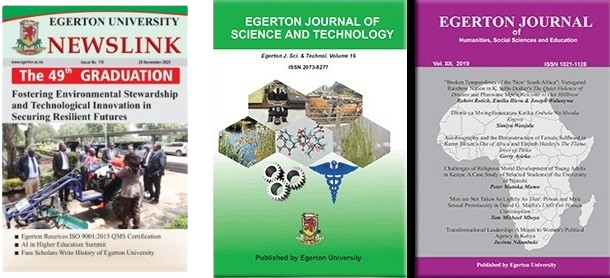


Egerton University NewsLink Magazine & Journals

Egerton University NewsLink Magazine & Journals

Egerton Portal

Egerton Portal

  • E-Learning Portal
  • First Years Portal
  • Graduation Portal
  • Selfcare Portal
  • Registration Portal
  • Students Portal
  • Staff Notice Board
  • E-Learning Portal
  • First Years Portal
  • Graduation Portal
  • Selfcare Portal
  • Registration Portal
  • Students Portal
  • Staff Notice Board
  • Students
  • Staff
  • Alumni
  • E-Campus
  • Downloads
  • Egerton Radio

QuickLinks

  • Campuses
  • Notice Board
  • Bachelors Programmes
  • Our Campuses
  • Timetables
  • Downloads Center
  • Emergencies
  • Intercom Directory

Visitors

  • Our Contacts
  • Calendar of Events
  • Map & Directions
  • Places of Interest
  • Cross Country
  • Procurement Info
  • Customer Feedback
  • University Events
  • Upgraded University noticeboard
  • Staff
  • Students
  • Alumni
  • Programmes
  • Applications
  • E-Campus
  • Library
  • Journals
  • Conferences
  • FAQ's
  • Feedback
  • Notices
  • Careers
  • Helpdesk
Copyright © {2026} Egerton University
"Transforming Lives through Quality Education"

sic donec

  • Home
  • Admission
    • Admissions
      • Undergraduate Admission
      • Post Graduate Admission
      • Available Intakes
      • Online Applications
      • E-Campus
      • KUCCPS Admission Portal
      • Higher Education Financing Portal
      • Joining Self-service Portal
    • Downloads
      • Fees Structures
      • Application Forms
      • Bursary / Work Study Form
      • Acceptance or Deferment
      • Student Registration Form
      • Student Medical Form
      • Rules and Regulations
      • Student's Hand Book
  • Academics
    • Division of Academics,Research and Extension
    • Academic Programmes
    • University Library
    • Scholarships & Grants
    • Faculties & Departments
    • School of Distance Learning (SoDL)
    • Institute of Women, Gender & Development Studies
    • Academic Directorates & Boards
  • Explore
    • Governance
      • Organisational Structure
      • Office of the Chancellor
      • The University Council
      • The Management Board (UMB)
      • The University Senate
    • Management
      • Office of the Vice-Chancellor
      • Division of Academics, Research & Extension
      • Division of Administration, Finance & Planning
      • Directorate of Research & Extension
      • Office of the Principal, NCCC
      • Deans of Faculties
      • Office of the Dean of Students
    • About the University
      • University History
      • Fact Sheet
      • University Profile
      • Vision and Mission
      • Our Mandate & Philosophy
      • University Anthem
      • Awards & Achievements
      • Partners & Collaborations
    • More About us
      • Campuses & College
      • Institutes & Schools
      • Directorates & Boards
      • Faculties
      • Departments
      • Teaching and Learning
      • Contacts, Location & Addresses
  • Research
    • Sections
      • Directorate of Research
      • Tegemeo Institute
      • Institute of CMRT
      • Directorate of DRTEC
      • Directorate of AgroPark
      • Njoro River Rehabilitation
      • University Liaison Office
    • More About the Division
      • UNESCO Chair in Bioethics
      • Finance & Accounts (R&E)
      • Projects & Publications
      • Collaborators & Partners
      • University Conferences
      • University Journals
      • Institutional Repository
      • Research News & Updates
    • Research News & Updates
  • Info
    • University News & Updates
      • Egerton Radio 101.7 FM
      • Latest News & Updates
      • Library Latest News & Updates
    • Public Information
      • Parents Portal
      • Service Delivery Charter
      • Egerton University Policies
      • Financial Statements
      • Calendar of Events
      • Exhibitions & Trade Fairs
      • Customer Feedback
      • Speeches
      • Quality Policy Statement
    • Students
      • Notice Board
      • Campus Life
      • Campus Tour
      • Photo Gallery
      • Downloads Center
      • Academic Timetables
      • E-Learning
      • Students Portal
    • Staff
      • Staff Notice Board
      • Update My Staff Profile
      • Performance Appraisal
      • Promotion Guidelines
      • Corporate Staff Email
      • Login to Staff Portal
      • Members of Staff
Egerton University use cookies to enhance your experience on our website. By browsing this website, you agree to our use of cookies. Read more about our Privacy Policy.
I accept