


By Musa Kurian
Egerton University hosted Professor Robert Baars and Ms. Esther Kapsoot from Van Hall Larenstein (VHL) University of Applied Sciences, the Netherlands, for engagements aimed at strengthening collaboration in research, innovation and sustainable food systems.
The team was received by Ag. Vice Chancellor and Deputy Vice Chancellor Administration Finance and Planning Prof. George Muthaa, Deputy Vice Chancellor Academics Research and Extension Prof. Bernard Aduda, Director Post graduate studies Prof. Charles MÉrimba and Faculty Member Dr Miriam Kyule.
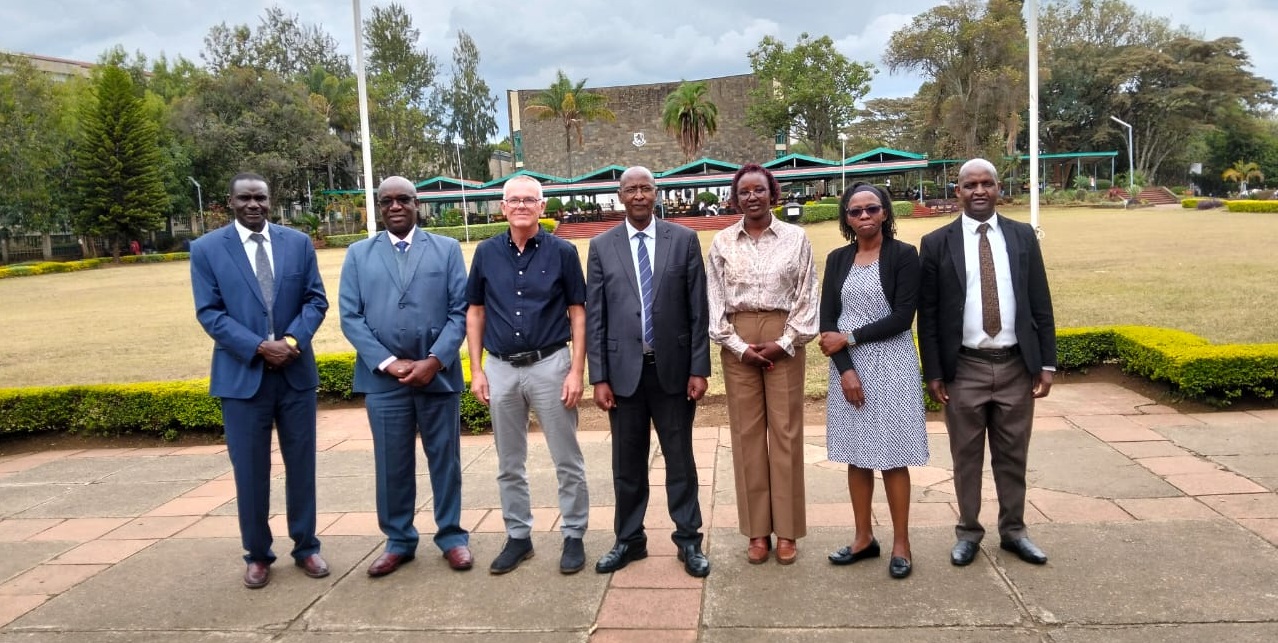
Egerton University hosted Professor Robert Baars and Ms. Esther Kapsoot from Van Hall Larenstein (VHL) University of Applied Sciences, the Netherlands, for discussions on strengthening collaboration in research, innovation and sustainable food systems. The visit explored opportunities for joint research, knowledge exchange and the application of the living labs approach to addressing challenges across agricultural value chains, including aflatoxin contamination in milk. (Photo credit: Kurian Musa/Egerton University)
The VHL team focuses on the living labs approach within the dairy value chain, bringing together researchers, farmers, entrepreneurs, communities and policymakers to co-create practical solutions to real-world challenges.
Through this collaborative model, stakeholders work together to generate knowledge, test innovations and develop solutions that respond to the needs of farming communities and the wider food system.
The engagements built on Egerton University’s partnership with Wageningen University in the Netherlands through the REFOOTURE project, implemented locally as the Nakuru Living Labs. The initiative seeks to strengthen innovation capacity and create an enabling environment for regenerative and inclusive food systems in Kenya, Ethiopia and Uganda.
During their visit, Professor Baars and Ms. Kapsoot held discussions with several teams at Egerton University, including the Agricultural Extension team and the CoELIB and 4K Club teams, among others.
These engagements provided opportunities to exchange experiences, share lessons from ongoing initiatives and explore areas of mutual interest in research, community engagement and agricultural innovation.
The team also visited Egerton University’s Food Safety Laboratory to discuss arrangements for its use in their ongoing work on aflatoxin contamination in milk, an important food safety concern with implications for public health, dairy production and market access.
A key outcome of the engagements was the exploration of new partnership opportunities centred on living labs, knowledge exchange, joint research initiatives, and student and staff exchanges.
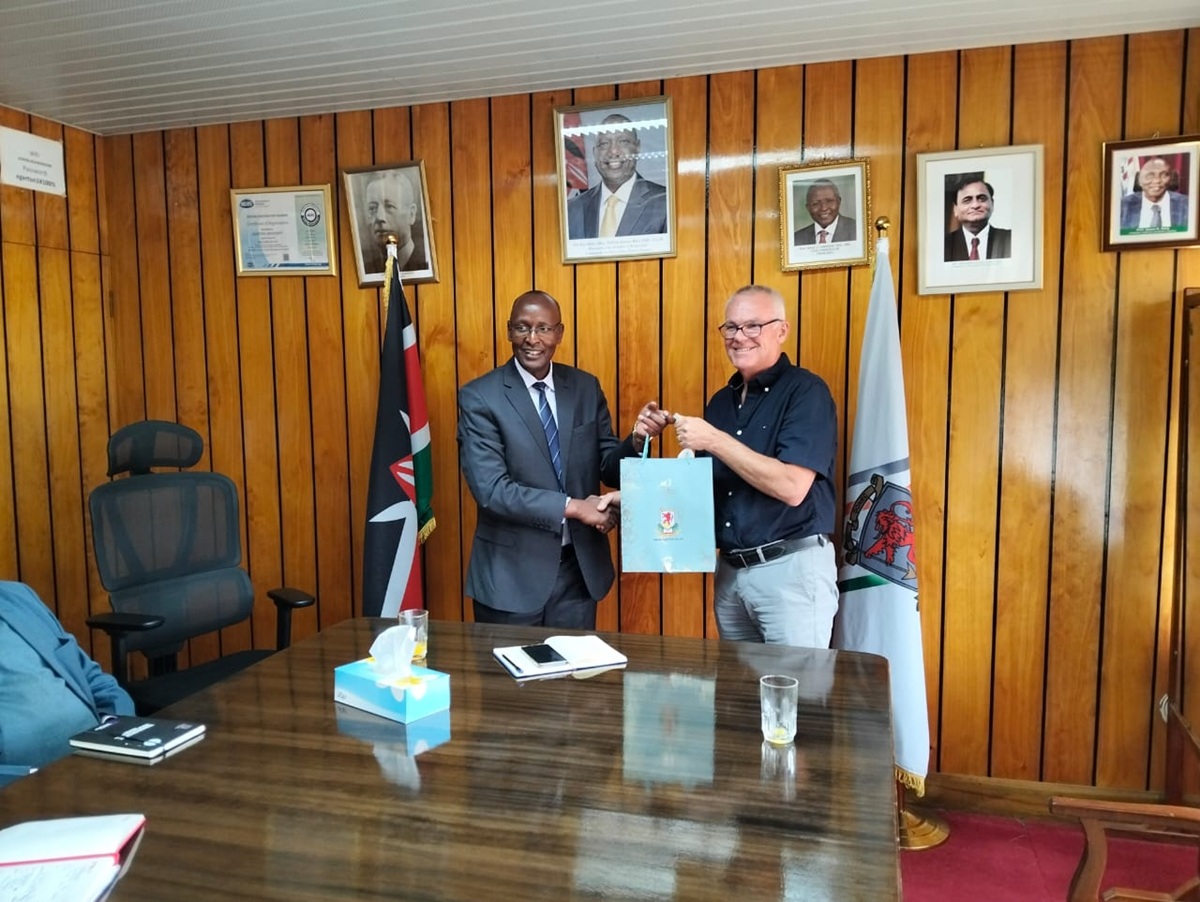
The visiting team from Van Hall Larenstein (VHL) University of Applied Sciences, the Netherlands, joined Egerton University representatives during engagements to explore new areas of collaboration in agricultural research, innovation and community engagement. The discussions built on the partnership under the REFOOTURE project, implemented locally through the Nakuru Living Labs, and focused on advancing regenerative and inclusive food systems through stakeholder collaboration, joint research and student and staff exchanges. (Photo credit: Kurian Musa/Egerton University)
The discussions underscored the value of international collaboration in advancing practical, inclusive and locally relevant solutions to challenges across agricultural value chains.
Egerton University remains committed to fostering strategic partnerships that translate research into tangible benefits for communities, strengthen agricultural innovation and contribute to a more resilient and sustainable food future.
The University appreciates Professor Robert Baars and Ms. Esther Kapsoot for their visit and continued collaboration, and looks forward to building on the shared vision for impactful research and innovation.